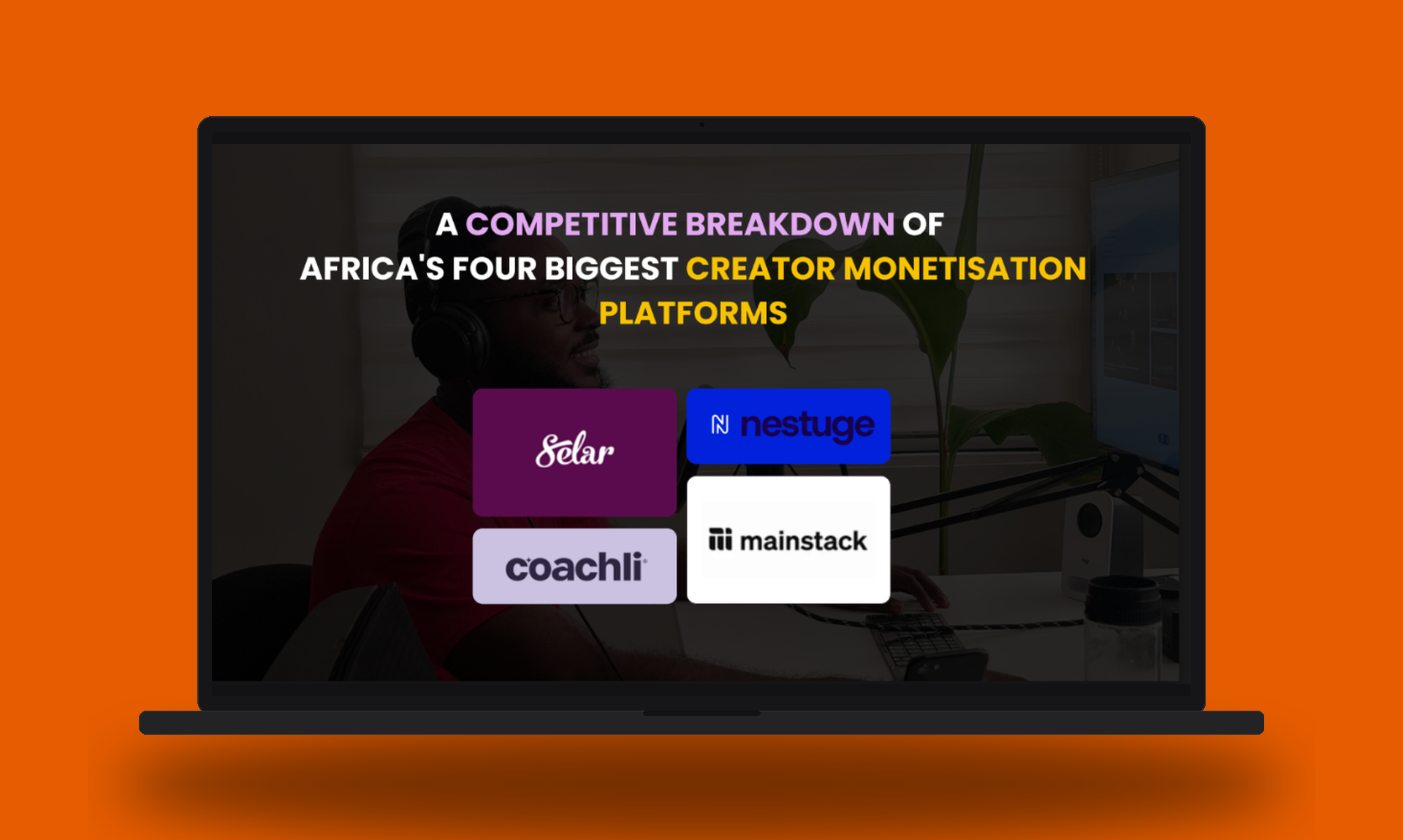
I analyzed four major creator monetisation platforms: Selar, Mainstack, Nestuge, and Coachli, to understand how they differentiate, who they serve, and where opportunities exist in an increasingly competitive market.
The question
The competitive landscape
This is where I'd make your existing presentation do the heavy lifting.
| Platform | Positioning | Best for | Differentiator |
|---|---|---|---|
| Selar | Commerce-first | Digital product sellers | Affiliate network + established trust |
| Mainstack | Brand-led | Brand-conscious creators | Aesthetic storefront experience |
| Nestuge | Automation/community | Creators building systems | Community + automated workflows |
| Coachli | Service/expertise | Coaches & experts | Booking + live service delivery |
Key insight
These platforms aren't really selling the same thing. They're competing around different ways of building an online business.
Selar
Focuses on frictionless checkout, currency flexibility, and affiliate distribution for product creators.
Mainstack
Focuses on sleek aesthetics, customizable link-in-bio storefronts, and premium visual identity.
Nestuge
Focuses on automated membership management, event gating, and community engagement infrastructure.
Coachli
Focuses on calendar integration, paid 1:1 sessions, webinars, and high-touch knowledge consultations.
What I learned
Features don't create differentiation on their own. Positioning does.
Looking across these four platforms showed me how products with increasingly similar feature sets can create very different market positions by choosing a specific customer, problem, and value proposition to own.
Looking beyond direct feature comparisons
It also reinforced the importance of looking beyond direct feature comparisons. Understanding why a product exists, who it is really for, and what alternative it is competing against can reveal opportunities that a simple competitor matrix misses.