Watch it in action
The idea
I built CleanDesk around a simple observation: most productivity tools make you do the organizing first. You have to decide what something is, where it belongs, how important it is, and when it needs to happen before the tool can actually help.
I wanted to reverse that. CleanDesk starts with the mess; the thoughts, tasks, ideas, and obligations in your head, and uses AI to help make sense of them.
How it works
01 — Dump
Write down what's on your mind naturally, without worrying about structure.
02 — Understand
AI interprets the input and identifies projects, tasks, priorities, and dates.
03 — Organize
Your messy thoughts become a structured workspace you can edit and manage.
04 — Follow through
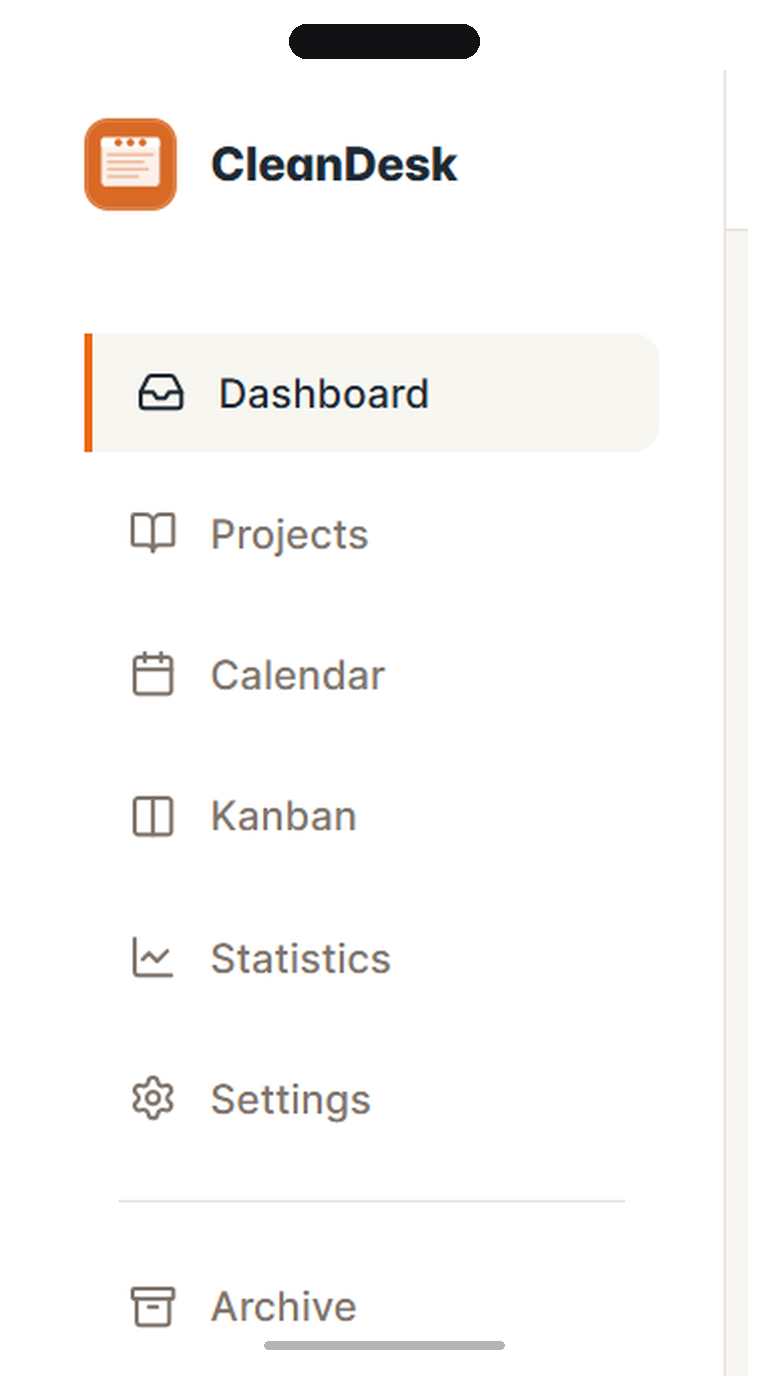
Use tasks, calendar integration, reminders, and productivity tracking to actually get the work done.
The stack
Built with:
What I built
AI task organization
Built the workflow that transforms unstructured thoughts into structured projects and tasks.
Task management
Created task creation, priorities, deadlines, statuses, and drag-and-drop organization.
Project workspaces
Built dedicated project spaces where users can manage tasks and keep notes in context.
Calendar integration
Connected tasks and deadlines to the user's calendar.
Email reminders
Built reminders to help users stay on top of upcoming work.
Productivity tracking
Added stats that give users visibility into their activity and progress.
What I learned
There are a lot of brands clamouring to add AI to their software and products. But AI is only valuable when it removes meaningful friction. Building CleanDesk taught me that the interesting question isn't “Where can I add AI?” It's “What work can AI actually take off the user's plate?” The core value of CleanDesk isn't that it uses AI. It's that the AI removes the cognitive effort of turning a messy brain dump into an organized plan.
Building the product also changed how I think about product marketing. I had to think beyond what the product says it does and understand what is happening underneath the interface, where the user gets value, where the experience can break and what makes the product meaningfully different. The value of a product is that it solves the user's problem, not that it's fancy or 'high tech'.